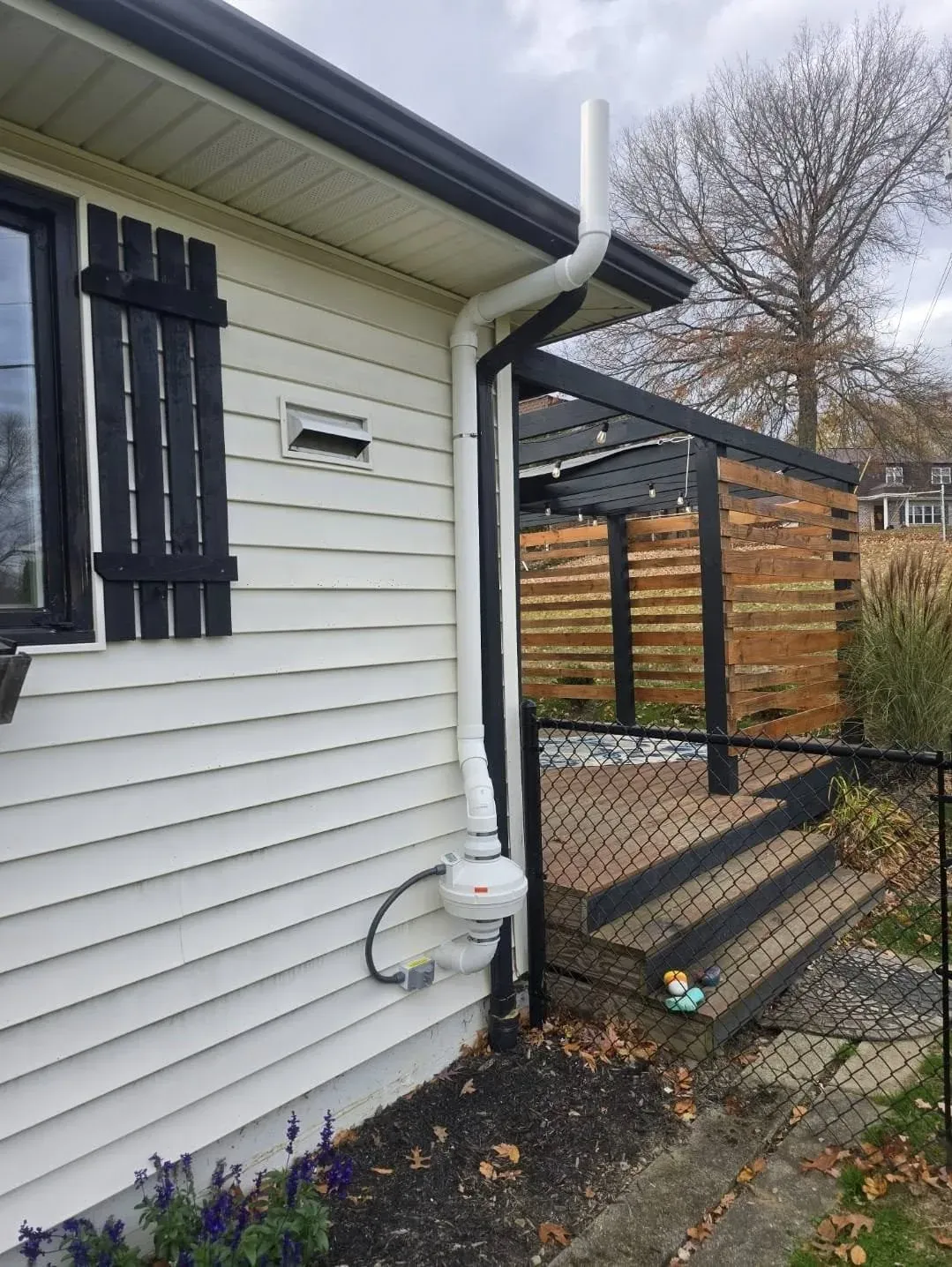
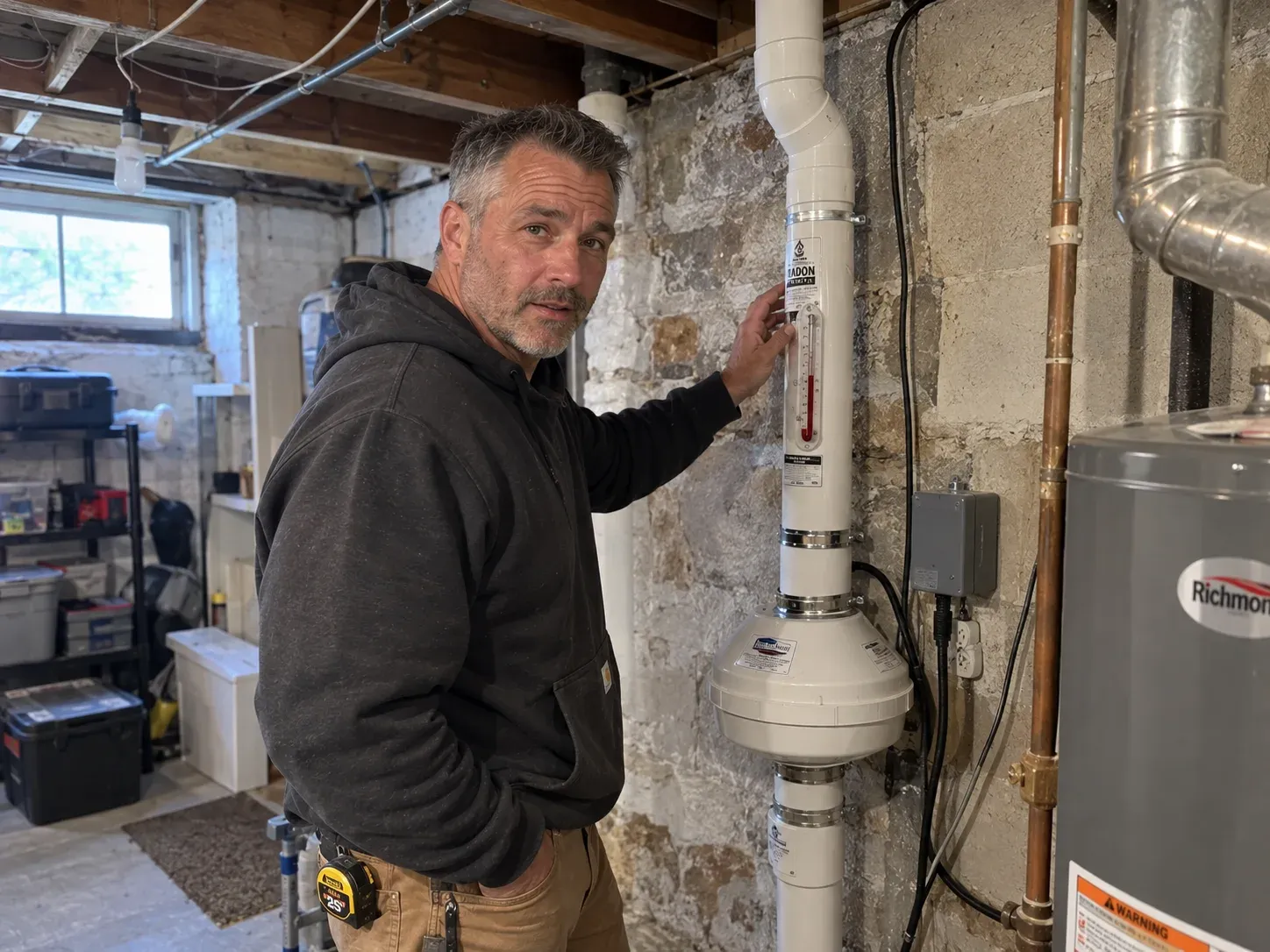
If you live in York County, Pennsylvania, and you have had a radon mitigation system installed, you might wonder what comes next. The fan is running, the sub-slab depressurization is in place, and the radon fan hums quietly in the basement. It feels like the problem is solved. And it very well may be. But the only way to know for sure is to do post-mitigation radon testing.
I have been in the radon mitigation field for years, and I have seen plenty of homeowners skip this step. They assume the system works because it is new and because the installer seemed confident. But radon is tricky. It moves through soil, finds cracks, and can change behavior with seasons, barometric pressure, and even how you use your home. A mitigation system is a mechanical solution, and like any mechanical solution, it needs verification.
What Post-Mitigation Radon Testing Actually Tells You
Post-mitigation radon testing is the process of measuring your indoor radon levels after a mitigation system has been installed. It answers one simple question: Is the system doing its job? The goal is to bring your post-mitigation radon level below the EPA guideline of 4 pCi/L. But the truth is, most systems installed by a competent professional like Dan Jenkins will aim much lower, often below 2 pCi/L or even 1 pCi/L.
The test itself can be done using different tools. The most common options are a short-term radon test with a charcoal canister, a long-term radon test using an alpha track detector, or a continuous radon monitor that gives real-time readings. Each has its strengths. A charcoal canister is cheap and easy to deploy, but it only captures a snapshot of two to seven days. A continuous radon monitor gives you hour-by-hour data, which can reveal patterns you would otherwise miss. An alpha track detector, left in place for three months to a year, gives you the most reliable average.
I usually recommend a two-step approach. First, do a short-term radon test within thirty days of the installation. This catches any obvious issues with the system early. Then, follow up with a long-term radon test over the next year to confirm the system holds up through all four seasons. The Pennsylvania Department of Environmental Protection suggests testing at least once every two years after mitigation, but I think that is the bare minimum. If you live in York County, where radon is a known problem, testing annually is a smarter habit.

Why You Cannot Trust the First Reading Alone
A lot of homeowners ask me if they can just test once and forget about it. The answer is no, and here is why. Radon levels fluctuate. A reading taken in July, when the ground is dry and your windows are open, might look perfect. But come January, when the house is sealed tight and the stack effect pulls soil gas up through the slab, that same system might struggle. I have seen crawlspace mitigation systems that worked fine in summer but allowed radon to build up in winter because the crawlspace was not fully sealed from the living space.
That is why post-mitigation radon testing should not be a one-and-done event. The first test after installation gives you a baseline. It confirms the system works under the conditions present at that moment. But you need to test again under different conditions to make sure the system is robust. A single charcoal canister test in mild weather might give you a false sense of security.
How to Get a Reliable Post-Mitigation Test
There are a few practical rules for getting a good reading. First, close all windows and exterior doors for at least twelve hours before starting the test. Radon comes from the ground, so outside air dilutes it. If you let fresh air in during the test, you will get a lower reading that does not reflect real living conditions. Second, place the test device in the lowest livable area of the house. For most people in York County, that is the basement or a first-floor room with a basement directly below. Do not put it in a closet, behind furniture, or near a vent. It needs free air circulation.
Third, run the radon fan continuously during the test. Some homeowners turn off the system to save electricity thinking they will just test later. That defeats the purpose. You are testing the system, not the house without it. If you want to know what your exposure is when the system is on, the system must stay on.
Fourth, use a certified lab or a calibrated continuous radon monitor. The cheapest test kits you find online may not be accurate. I have seen kits that read 2.0 pCi/L when a professional continuous radon monitor right next to them read 4.5 pCi/L. That difference is the line between safe and unsafe. Spend the extra twenty dollars for a test that you trust. The Pennsylvania Department of Environmental Protection provides a list of approved labs, and many local health departments in York County offer test kits as well.
What If the Test Shows a Problem?
If your post-mitigation radon level is still above 4 pCi/L, do not panic. It does not always mean the installation was bad. Sometimes the system is undersized for the house, or the sub-slab depressurization is not drawing from the right area. Other times, a crawlspace mitigation might need an additional seal around a crawlspace door or a sump pump cover. A good radon mitigation contractor will come back and troubleshoot. Dan Jenkins, for example, includes a radon system warranty with his installations that covers adjustments for a set period. That warranty is only useful if you actually test and report the problem.
I have also seen cases where the test was done incorrectly. The homeowner left a window cracked, or placed the test on a shelf too close to a radon fan intake. Always follow the test instructions exactly. If you are unsure, hire someone to do the test for you. A home inspection company that offers radon testing can handle it, or you can ask your mitigation contractor to do a follow-up test with a continuous radon monitor.
The Bigger Picture: Long-Term Health and Home Value
Radon is the second leading cause of lung cancer after smoking, according to the EPA. That is a serious fact, but I do not say it to scare you. I say it because post-mitigation radon testing is the only way to verify that you have reduced that risk. Without testing, you are gambling. You might have spent thousands of dollars on a mitigation system and still be living with elevated levels because of a hidden leak or a system that is not pulling enough vacuum.
There is also a practical side. If you ever sell your home in York County, the buyer will likely ask for radon test results. Having a documented history of post-mitigation radon testing, with low results, can be a strong selling point. It shows you took the problem seriously and that the house is safe. Some buyers will even walk away if they see no testing records, because they do not want to inherit the uncertainty.
Which Test Type Should You Choose?
Here is a quick comparison to help you decide:
- Charcoal canister: Cheap, fast (2-7 days), good for a quick check. Less accurate if humidity is high or if the test kit is old.
- Alpha track detector: More expensive, but gives a long-term average (3-12 months). The gold standard for annual testing.
- Continuous radon monitor: The most informative. Shows hourly changes, detects spikes, and gives you confidence in the system's performance. Costs more upfront but can be reused.
For post-mitigation radon testing, I lean toward the continuous radon monitor for the first follow-up. It gives you data over a few days, and you can see if levels spike at night or during a storm. That detail matters. A charcoal canister will just give you a single number, and you will never know if that number is an average of low and high periods or a steady reading.
Final Thoughts from the Field
I have been to homes in York County where the mitigation system was installed five years ago and never tested since. The owners assumed everything was fine. When I finally tested, the radon levels were back up to 6 pCi/L. The radon fan had lost efficiency, or a new crack had opened in the slab, or the crawlspace had settled. It happens. Systems age. Foundations shift. Seals degrade. That is why I tell every homeowner: the mitigation is not the end of the story. The test is.
Post-mitigation radon testing is not a hassle. It is a simple, affordable step that protects your health and your investment. If you have not done it yet, pick up a test kit this week. Run it with the system on. And if the number is good, do it again in six months. If it is not, call your installer and get it fixed. That is the responsible way to live with radon in Pennsylvania.